
The Tech-Workplace Paradox: Why AI Power Users are Rewriting the Design of Workplaces
Changing Tomorrow Season 2 Episode 2: Is AI Making the Workplace More Human?
This article is a structured digest of our conversation with Janet Pogue McLaurin, Global Director of Workplace Research at Gensler.
🎧 Stream the full conversation:
📄 Get the backstory: Read Liveable’s Spring 2026 Brief: AI Accountability in the Built Environment.
The Tech-Space Paradox
Our cultural narrative warns that artificial intelligence will isolate us, pushing everyone into lonely digital silos[cite: 1]. But data from Gensler’s latest Global Workplace Survey reveals a massive, beautiful plot twist: the people using AI the most are actually spending less time working alone.
AI power users—the 30% of the workforce actively using these tools across their personal and professional lives—are socializing more, learning faster, and reporting significantly stronger relationships with their teams than non-users.
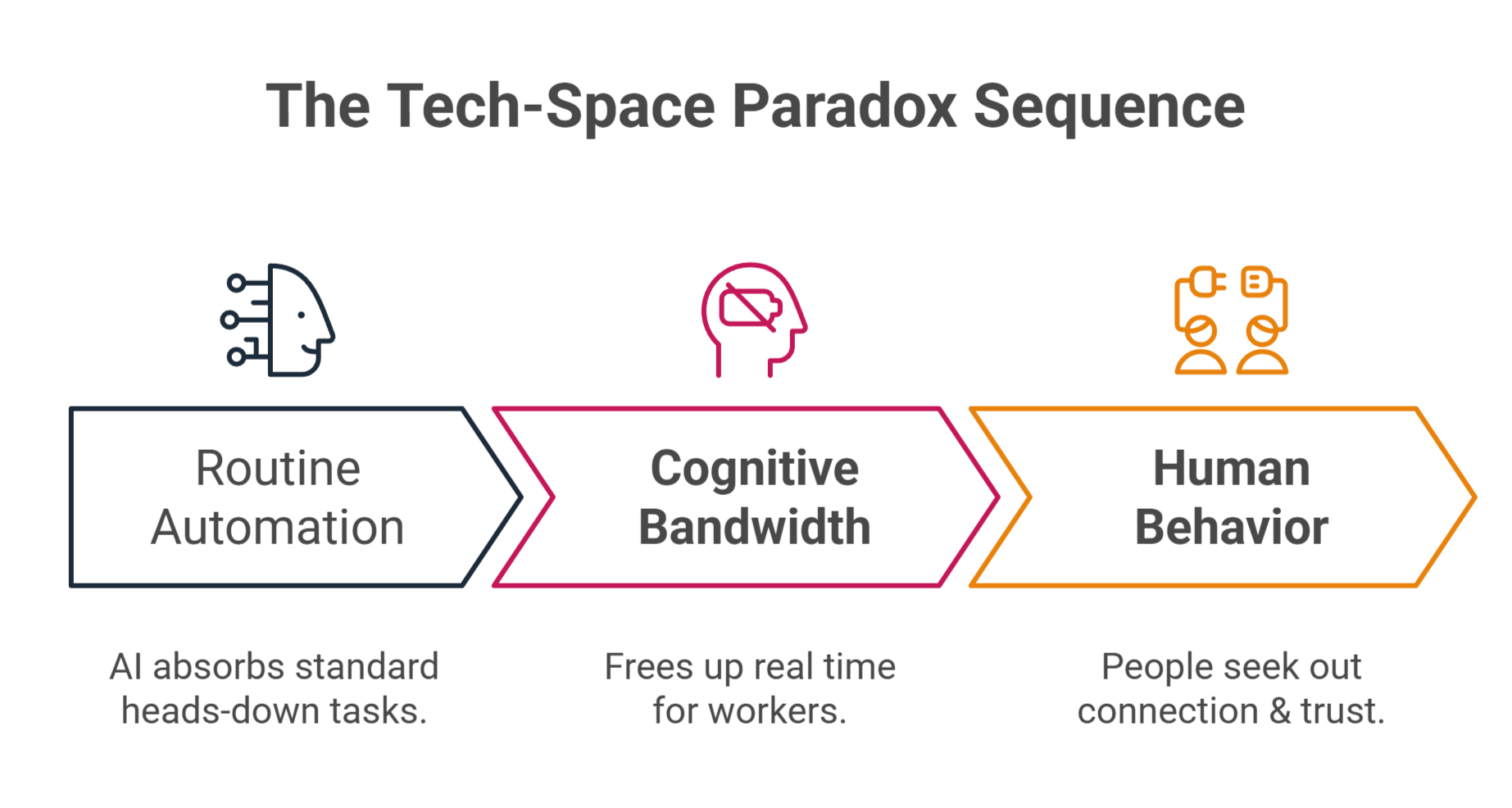
We call this the tech-space paradox: the more virtual our capabilities become, the more valuable intentional physical space becomes. AI is not replacing the office; it’s stripping away the boring, routine tasks so humans can do what only humans do best: connect, co-create, and imagine what’s next.
The Failure of the 2019 Office
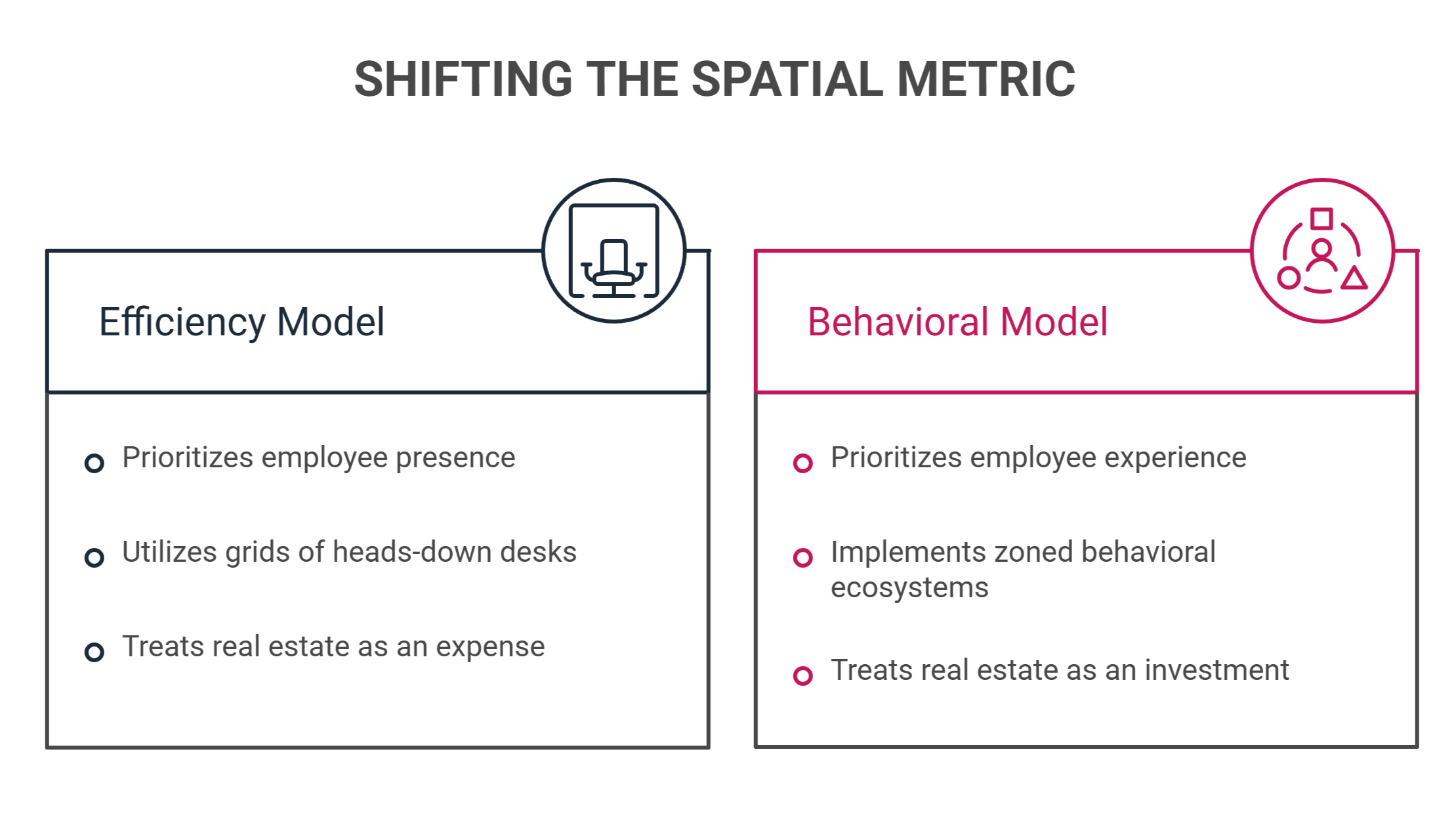
To build an office that makes sense in an AI world, we have to look back. Gensler’s research shows that corporate real estate was already fundamentally broken by February 2020. For decades, spaces were optimized for pure efficiency—maximizing seat counts and tracking presence via badge swipes. Floors were just massive grids of heads-down processing desks.
When remote work became a reality, people didn't just reject the commute; they rejected environments that ignored basic human needs.
In an AI-augmented world, forcing an employee to commute to a standard desk just to process emails is an operational misstep. The entire value of bringing people together now lies in the things software cannot replicate: spontaneous mentorship, contextual problem-solving, and cross-functional creativity.
Flipping the Floor Plan Script
How do we design for behavior over density? Janet points to a model piloted by Gensler's San Francisco office, where they completely flipped the traditional office plan on its head:
The Exchange: The front door opens into a vibrant hospitality zone built for open connection and running into people.
The Collaboration Ecosystem: The center of the office is an open, buzzing zone designed for active team problem-solving.
The Focus Vault: Deep in the back, the lights dim. The Vault is a silent, cell-phone-free sanctuary with no talking or food allowed, dedicated entirely to uninterrupted focus.
This setup relies on purposeful abundance. The space is entirely unassigned, giving workers complete spatial agency to choose the exact environment their changing mood and task require throughout the day.
Designing to the Edges
When you give people spatial choice, you naturally build a more inclusive, neurodiverse environment. "Designing to the edges" means recognizing that your workforce is not a monolith. True inclusivity looks at cognitive diversity, neurodivergence, and mobility.
Right now, according to research 34% of global workers are actively hacking their workspaces—implementing DIY fixes to handle basic failures in ergonomics, lighting, and noise control. When employees have to spend cognitive energy modifying a broken office, performance drops. Leaders need to involve people in the co-design process to make the office a destination, not an obligation.
Ultimately, real estate cannot be managed as a static expense to be minimized. It is an investment in human capital. Bringing people to the same place at the same time is what builds team trust, strengthens weak ties, and triggers the breakthrough ideas that drive market innovation.
Listen to the entire episode:
Read the report: Liveable's Spring 2026 brief, Automated Decisions, Human Consequences
Take Action
At Liveable, we help organizations evaluate the impact of the choices they are already making.
Our People Positive™ Snapshot uses a practical social value lens to review your policies, projects, products, or business—identifying what’s working, where friction lies, and how better strategy can drive stronger outcomes. It’s built for teams that want a clear starting point, not a months-long audit.
👉 Create your People Positive™ Snapshot